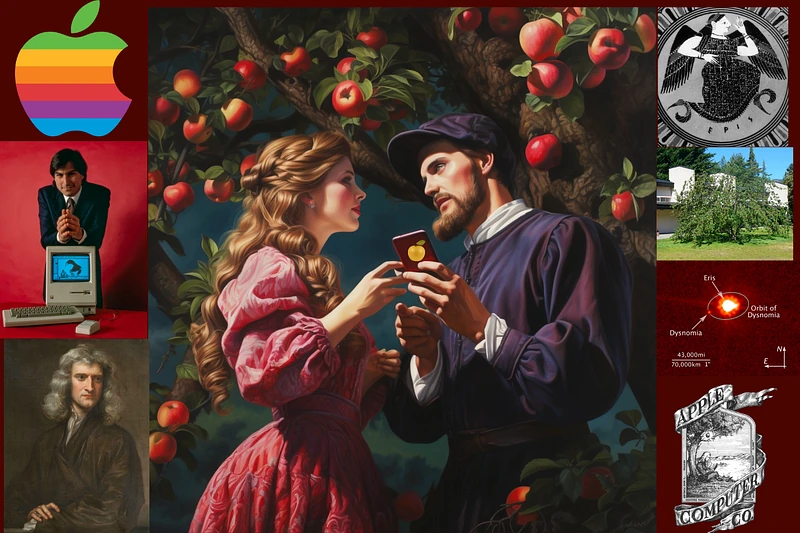
Images relevant to the core theme of this article presented. The central portrait is AI-Generated. Images surrounding the portrait are all from wikipedia (in public domain).
This article presents additional evidence that supports our central hypothesis regarding the potential existence of life within a meticulously designed and structured reality. This evidence contributes to our ‘Name to Script’ hypothesis, which seeks to provide scientific interpretations for various profound mysteries spanning from the origins of life to paranormal and metaphysical phenomena. These subjects, frequently regarded as fringe or speculative within mainstream science, are domains that modern scientific journals are hesitant to explore.
In this study, we highlight statistically significant correlations and synchronicities among various entities, including the dwarf planet Eris, the mythological Goddess of Discord Eris, notable figures like Isaac Newton, the founders of Apple Inc., historical Apple cultivators, renowned Artists with works featuring Eris, businesses with ‘Apple’ in their name, and even a contemporary religion/cult centred around Eris.
As previously explored in detail, Our research delves into overlooked realms within ancient and modern scientific and pseudoscientific disciplines, including quantum physics, simulation theory, cosmology, astrology, poetry, divination, omenology, spirituality, philosophy, and symbolism.
In this study, we primarily employ cosmic maps and ancient cosmology, focusing on the newly discovered dwarf planet Eris and its science defying synchronicity with a multitude of people, events, and phenomena spanning over 3000 years across temporal and spatial scales.
We propose that such synchronicities are only conceivable within a ‘information-processing system’ or a ‘scripted matrix,’ wherein each name each name or concept serves as a code or command for specific outcomes that consistently hold true universally. This suggests that our perceived reality might exist within a simulated framework governed by distinct underlying codes. These codes or commands appear to correlate directly with the ‘Cosmos Above’ as evidenced by precise mathematical alignments as distinct mathematical alignments**,** allowing us to utilise them, as demonstrated here, to access the program manual and decipher the codes at will.
This concept raises profound inquiries regarding the nature of the programming language that shapes this vast construct and the enigmatic mechanisms orchestrating this simulated reality. Within this hypothetical matrix, the programming language surpasses conventional computing, possibly representing an advanced ‘abstract language’ where intelligence itself resides.
We’ve been contemplating whether our universe could function as a ‘neural network’, akin to an interconnected system of ‘nodes’ operating at a microscopic scale similar to the neurones in our brains. This neural network could play a pivotal role, acting as universal software that connects our consciousness with the matrix, allowing us to influence the simulation through our thoughts.
This hypothesis holds significant implications, offering potential insights into metaphysical, paranormal, astrological mechanisms, archetypes, and occult phenomena. It challenges our perception of reality by presenting a multifaceted perspective that integrates correlation and causation-related mechanisms governing this enigmatic world of synchronistic and self-evolving simulation.
Despite compelling evidence, our research faces challenges in gaining acceptance in traditional scientific circles due to biases against ‘new-age’ and ‘fringe’ fields, a sentiment shared by both religious and scientific communities.
As scientists, we have come to value ancient beliefs like the Hermetic principle of ‘as above, so below.’ However, we attribute such significance to quantum phenomena and the scientific method, not mystical influences.
From a scientific standpoint, we advocate against outright dismissal of ancient or modern concepts originating from the New Age movement, old folklore, or omens. We advocate for interpreting these beliefs as deciphering processes from our own minds or quantum systems, enabling us to navigate a world of cosmic patterns and quantum connections for a deeper understanding of reality. Furthermore, by harnessing this understanding, we may unlock the true nature of our reality and decipher the mysteries of quantum phenomena within the realm of science.
We are disheartened by the reality that, as fellow STEM PhDs, we reached out to over 100 prominent scientists actively researching such topics to share our findings and perspectives. Surprisingly, only one scientist responded, showing genuine interest and providing valuable feedback. Notably, this scientist is known for his own fringe and controversial views, leading us to ponder the scientific community’s receptiveness to innovative ideas and unique but meaningful discoveries.
This lack of response raised concerns about the scientific community’s reluctance to embrace unconventional ideas, potentially hindering scientific progress. We recognised this as part of the evolutionary process within a self-evolving matrix, where changes occur when the majority of participants are ready to understand and adapt to new concepts.
We emphasise the importance of open-mindedness, scientific integrity, and collaboration among scientists to advance knowledge and innovation. Ignoring new ideas could impede scientific growth, as historical figures like Tesla, Einstein, and Feynman benefited from exchanging and building upon each other’s ideas, leading to significant advancements in science and technology
In our previous articles, we explored fascinating synchronicities with astronomical odds, concepts that modern scientists often dismiss as mere coincidences, related to significant historical events. These include correlations between the September 11th terrorist attack and asteroid 911, the Hiroshima and Nagasaki atomic bombings and asteroids bearing the exact names of these cities in Oppenheimer’s horoscope, and the mind-boggling correlations between Covid-19 pandemic and asteroids Wuhan, Cronus, Kron, Kronos, and more. Additionally, we discovered further remarkable correlations linked to the Israel-Palestine conflict, where remotely viewed texts and images corresponding to every degree of the zodiac in 1925 (known as Sabian Symbols) aligned precisely with the degrees of the moon highlighted during the solar and lunar eclipses of October 2023. These alignments matched the ongoing global themes that unfolded during the eclipse period with an eerie level of accuracy.
For those who approach these concepts from a scientific, logical, or reductionist standpoint, dismissing these connections as mere random coincidences becomes increasingly challenging. The odds are remarkable, as demonstrated by our statistical analysis of Oppenheimer’s chart and symbolism, providing substantial support for our perspective.
A. Main Agenda of the Study
As in our previous studies, we initiated our investigation regarding ‘name to script’ hypothesis by reverse engineering and researching cosmic patterns, celestial bodies, names/concepts, and any apparent associations with an unfolding narrative. Our objective was to determine ‘if’ these celestial bodies held significant positions or correlations with the themes implied by their human-assigned names.
The whole journey began when I observed my colleague Eion’s keen obsession with eating apples. One day, while analysing Steve Jobs’ chart, I noticed that he shared the exact moon placement and configuration with my colleague, both of them having the script of the moon fused with dwarf planet Eris in their horoscopes (Appendix). Initially, as a rational scientist, I didn’t pay much attention to it. At that time, I was just delving into learning astrology and hadn’t considered researching asteroids. However, a few months later, while analysing Isaac Newton’s chart, I noticed a strikingly similar configuration involving his moon script (Appendix). This piqued my curiosity, leading me to look deeper into astrology of asteroids. Being relatively unfamiliar with Greek mythology, I actually learned about various Greek and Roman mythologies through searching and studying modern asteroids. This newfound knowledge captivated me with the names, stories, myths, and overall significance. As I learned more about asteroids and their associated mythological stories, I was astonished when I came across the story of Eris and the “Apple of Discord.” (Figures 1,2)
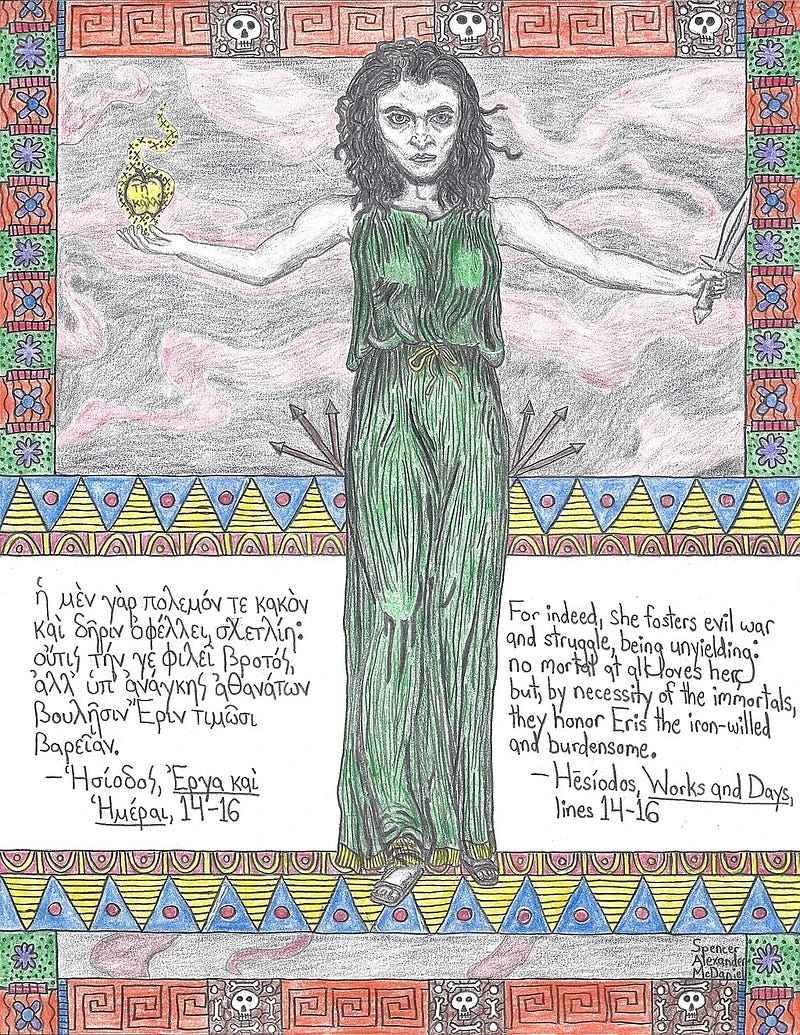
Figure 1. Pencil illustration of Eris, the Greek Goddess of Discord (Spencer Alexander McDaniel, 2020). “Her peplos is green, symbolising envy, a common source of strife. In her right hand, she holds golden apple with the words “τῇ καλλίστῃ” on it. In her left hand, she holds a xiphos, a kind of ancient Greek sword. A passage from Hesiodos’s Works and Days is written in Greek on her right” ( Wikimedia Commons )
This was truly a Eureka moment, and since that incident, I’ve had too many to count. For instance, I noticed that asteroid Potato was in a prominent position in Ireland’s chart during the Potato famine of 1800s. I found that asteroids named after the fallen souls of the Space Shuttle Challenger occupy prominent and relevant positions in their associated horoscopes, to such an eerie level that even the flight pilot and flight engineers have these asteroids associated directly with their roles and planetary archetypes. These asteroids were named posthumously and randomly; it’s not as if NASA sent astrologers to match them to these charts (although that would be impressive to me if NASA was that enlightened and ‘in the know’). I once heard Astrologer Rick Levine mentioned that during an event in the White House where a famous saxophone player performed, asteroid SAX was in a very prominent placement in the relevant charts. I have thousands of such examples, which I will publish one by one, regardless of whether science takes notice or not.
Consequently, to determine if the correlations observed in just three charts are more than mere coincidences, I embarked on conducting my own comprehensive research. This involved examining the significance of Eris in numerous Eris-related charts and assessing the extent of this significance. Additionally, I explored the significance of Eris in various Apple-related charts and investigated any other Apple-related phenomena for which an asteroid has been named (Appendix). If such phenomena exist, I sought to ascertain if the corresponding Apple-related asteroid holds significance in the corresponding charts as well.
This exploration aimed to validate the concept of an advanced abstraction language, suggesting that intelligence resides not only in instructions but also in abstraction itself. Through abstraction, tangible entities could arise from conceptual ideas, laying the foundation for computation and intelligence within this simulated reality.
B. Myth of Ἔρις (Eris)
The earliest known account of Eris comes from Greek mythology (Figure 2). Eris is mentioned in Hesiod’s “Theogony,” which dates back to around the 8th century BCE. In this ancient text, Eris is described as the goddess of discord and strife, playing a significant role in causing the events that led to the Trojan War.
“Ruinous night then gave birth to Deception and Sex
And destructive Old Age, and also strong-hearted Strife.
Then hateful Strife gave birth to grief-causing toil,
And Forgetfulness, and Hunger, and tearful Pains,
Battles, Wars, Murders, and Mankillings,
Conflicts, Lies, Arguments, Doubletalk,
Bad-government, Blindness, and Gatherings with others,
And even Oath, who pains mortal men the most of all
Whenever someone willingly breaks a sworn word.”
(Hesiod, Theogony, 7th Century BCE, p 224–232) (1)
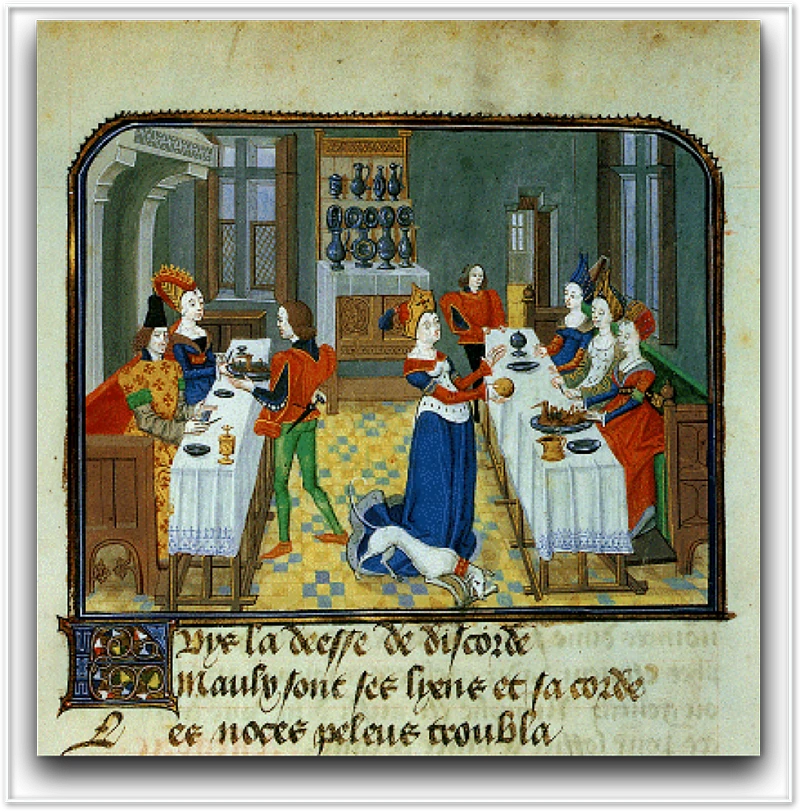
Figure 2. The Wedding of Peleus and Thetis Miniature. Adaptation work by Jean Miélot’s of Christine de Pisan, L’Epître d’Othéa (ca 1460) (Wikimedia Commons)
Ancient literature depiction of Eris paints her as a character that incites jealousy and envy, provoking conflict and anger among mortals (2,4). In Roman mythology, the counterpart to Eris is Discordia, embodying similar characteristics and symbolising chaos and discord. However, in Nordic mythology, there isn’t a direct equivalent to Eris or Discordia. The Norse pantheon features its own distinct set of deities with unique domains and attributes. Nevertheless, Loki, the trickster god, shares some resemblances with Eris by causing strife and chaos through his mischievous acts .
The tale of Eris, the goddess of strife and discord, holds a pivotal yet often underestimated place in the narrative leading to the Trojan War. Her notorious act of tossing the ‘golden apple’ with the inscription “To the Fairest” into the gathering of goddesses at the wedding of Peleus and Thetis initiates a sequence of events that eventually sparks the renowned conflict.
The narrative unfolds at the wedding of Peleus, a mortal hero, and Thetis, a sea nymph and daughter of the sea god Nereus. The divine beings of Olympus receive invitations to the grand celebration, except for one, Eris. Feeling snubbed and infuriated by her exclusion, Eris devises a cunning scheme to disrupt the festivities and sow ‘discord’ among the celestial guests.
In a calculated act of mischief, Eris acquires a ‘golden apple’ from the ‘Garden of the Hesperides’ and marks it with the provocative message “To the Fairest.” This simple yet potent gesture sets the stage for a heated rivalry among three powerful goddesses: Hera, Athena, and Aphrodite. Each goddess believes she deserves the apple, leading to escalating tension and a fierce competition among them.
To settle the dispute, Zeus, the king of the gods, wisely entrusts the decision to Paris, a mortal prince of Troy renowned for his judgment. Each goddess attempts to sway Paris with promises of great rewards in exchange for being declared the fairest. Hera offers power and dominion, Athena offers wisdom and prowess in battle, and Aphrodite pledges the love of the most beautiful mortal woman, Helen of Sparta.
Paris ultimately selects Aphrodite as the fairest, seduced by the promise of Helen’s love. This choice triggers a series of events culminating in Helen’s abduction by Paris, sparking the conflict between the Greeks and the Trojans, the Trojan War (2,4).
Despite her minor stature in the Greek pantheon, Eris proves to be a catalyst for chaos and upheaval through her cunning and manipulative actions. Her role in the wedding of Peleus and Thetis underscores the potency of discord in disrupting harmony and inciting conflict, shaping both mythology and history.
C. Astronomy & Astrology of Eris
Despite the ancient origins of the myth of Eris, the dwarf planet 136199 Eris is a relatively recent discovery. Positioned in the outer reaches of the solar system beyond Neptune’s orbit, Eris was first observed in 2003 and initially designated as 2003 UB313. It was a team of astronomers from Caltech who made the observation, but the data was thoroughly analysed in 2005 (3). The figure 3, according to the astronomers who discovered Eris, is a composite of three separate frames captured on the night of October 21st, 2003, when Eris was originally spotted. The astronomers report: “We began a special reanalysis a year later to specifically look for very distant objects. This reanalysis found the new planet at 11:20AM PST on January 5th 2005, almost 1 & 1/2 years after the initial data were obtained.” (3)
Of course, logically, one should not expect any relation whatsoever between the myth of Eris and the discovery of this dwarf planet. However, after finishing reading this article, you may be confused and see a level of relationship warranting further studies exactly as we have been exploring.
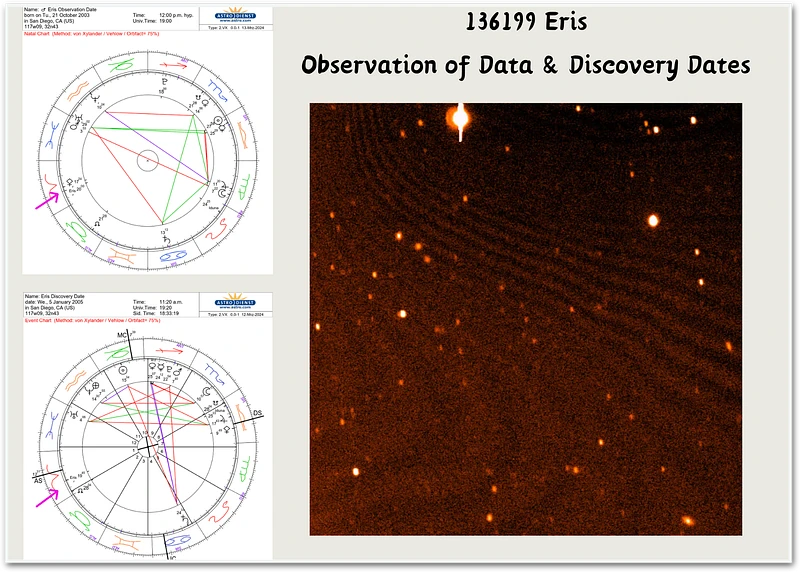
Figure 3. The image above shows the three frames taken the night of October 21st, 2003 when initial data for Eris (new planet) was gathered (3). Horoscopes on the left correspond to Eris’ Observation (top) and Eris’ Discovery events (bottom). For the latter, we have the exact time of event. (Horoscopes generated via astro.com)
The name “Eris” was proposed by the discoverers and officially accepted by the International Astronomical Union (IAU) (3). According to the discovery team, the decision to name the celestial body Eris was partly influenced by Greek mythology, where Eris is known as the goddess of strife and discord. Remarkably, following the discovery of Eris,intense debates ensued regarding the definition of what qualifies as a planet, ultimately leading to the reevaluation of celestial body classifications by the IAU (3).
This reevaluation resulted in the controversial reclassification of ‘Pluto’ as a “dwarf planet” in August 2006. One could argue that Eris metaphorically threw a “Golden Apple” at the IAU, initiating chaos that ultimately led to dethroning of Pluto.
This mysterious synchronistic phenomenon, in which the archetype the planet is named after seems to manifest during its discovery and naming, is truly astounding. It is well known among astrologers and even recognised by some astronomers. Chaos befalling upon the discovery of Eris was only to be expected.
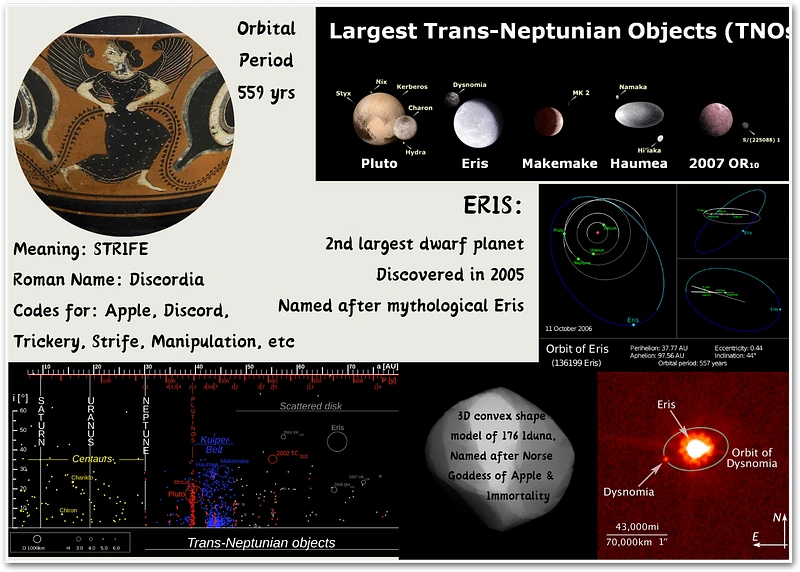
Figure 4. Various images of dwarf planet Eris are illustrated. Top right image shows extreme tilt and unusual orbit of Eris, compared to Pluto and other trans-neptunian planets(5). Bottom right image shows an image of Dysnomia, moon of Eris(5). Left bottom Image shows distribution of trans-Neptunian objects (5). The 3D Convex shap image in the middle depicts asteroid 176 Iduna . Top left image shows the ancient Greek pottery image of Eris (2)
From an astronomical standpoint, Eris boasts an orbital period of 559 years, featuring an exceptionally tilted orbit. This tilt is evident in its inclination of 44 degrees compared to the ecliptic plane, contrasting with its counterpart Pluto, often dubbed its “twin,” which tilts at a mere 17 degrees (Figure 4).
Due to this steep inclination, Eris traverses through only a handful of constellations within the traditional Zodiac. Notably, it entered the realm of Aries in the 1920s, a positioning that accentuates its celestial influence. This heightened influence stems from Eris’s close association with the mythological figure Ares, the God of War. In ancient tales, only Ares, Eris’s brother, could withstand her presence, as they both reveled in the chaos and strife of battle (2,4).
In astrology, Eris in our chart reveals areas where we may have the potential to incite discord and upheaval, symbolised by throwing the “apple of discord” to catalyse significant change. Additionally, it indicates areas where we may feel snubbed or slighted, leading us to take things very personally. This personal affront can drive us to operate in a mode of chaos, seeking to right perceived wrongs with fervour and intensity.
Eris can indeed be a powerful controversial force in our charts, especially when prominently placed with luminaries, on angles, or alongside personal planets. In spiritually evolved individuals, a heightened impulse of Eris energy may lead to causing upheaval to bring about necessary and beneficial changes for many. Astrologers often refer to such individuals with evolved Eris placements as “paradigm shifters,” acknowledging their potential to catalyse transformative shifts in consciousness and societal norms.
In my own chart, Eris resides in the 9th house, governing education, academia, publications, scientific or religious consensus, and belief systems. Many would agree that this perfectly aligns with the work I am doing through Cosmic Program. However, I aspire to be a “paradigm shifter” through the Apples that I am throwing.
D. Summary of Results
a. Horoscope Analysis of Eris’ Discovery:
To strengthen our argument that these cosmic entities function as coded commands within our simulated reality, we start our analysis by presenting two charts related to the discovery of Eris (Figure 3). If our reality is indeed scripted, the command represented by ‘Eris’ should hold significance in charts that are synchronous with its observation and discovery.
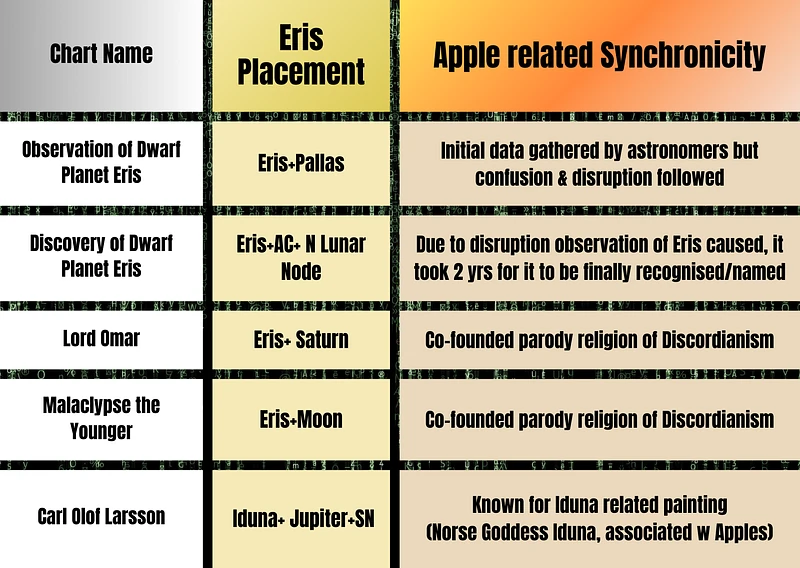
In the Observation chart, we observe Eris aligned with Pallas. Pallas is commonly associated with perceiving intricate mathematical patterns, a trait seen in renowned mathematicians and geniuses who possess a prominent Pallas in their charts. Einstein, for instance, had Pallas closely linked with his moon. The combination of Eris and Pallas in her own Observation chart seems to signify the ability to discern a unique and challenging pattern related to ‘Eris’.
Turning to the chart of Eris’ discovery/naming date, we note that the exact birth time aligns with the discoverer’s own account. In this chart, Eris is positioned with the Lunar Node (a point symbolising fated destiny) on the ascendant and within the first house, representing the ‘self.’ Essentially, in Eris’ discovery chart, Eris is clearly defined as the central figure, prominently placed in the initial quadrant of the chart. This matter is strictly time-dependent and the odds of this happening randomly is very small. This chart couldn’t be more fitting for its namesake, epitomising the embodiment of Eris within the chart’s structure.
b. Horoscope Analysis of Apple Inc. & Its Three Founders:
In our subsequent analysis, we compiled as many horoscopes as possible related to the Apple Corporation (Figures 5 & 6). The motivation behind this extensive study stemmed from the preliminary observations I had made about Steve Jobs, Apple (the fruit), and Eris earlier. We aimed to investigate whether Eris acting as a ‘script’, abstractly representing ‘apple,’ exhibited notable placements in these Apple-related horoscopes. Our initial hope was to find one or two strong correlations, but the results surpassed our expectations.
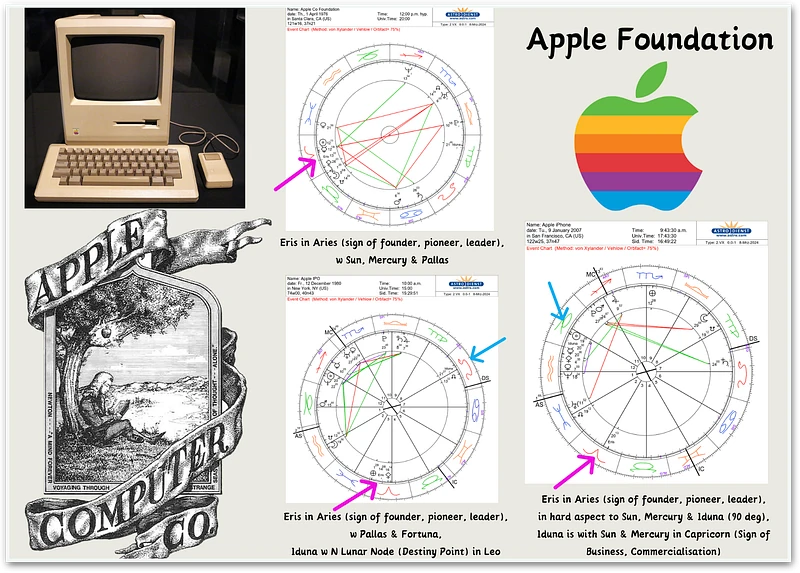
Figure 5. Three Distinct Horoscopes Related to Apple Inc.: Apple Foundation, IPO, and iPhone Release (Horoscopes generated via astro.com)
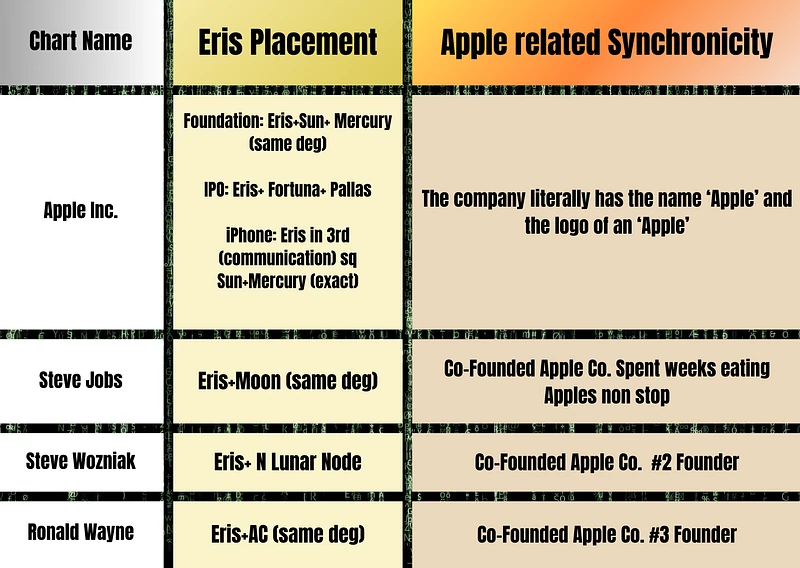
To our delight, we discovered Eris’s distinct influence across these charts. Surprisingly, the three main founders of Apple Corporation, Jobs, Wozniak, and Wayne, displayed rare and prominent Eris placements, a statistical improbability that caught us off guard (Figure 6). This unexpected finding adds weight to the hypothesis that these celestial bodies may indeed correlate with/code for the concept of ‘apple’ in a symbolic or abstract sense within our simulated reality. Even more intriguingly, the charts for the foundation of Apple Corporation, its IPO, and the release of the iPhone all prominently displayed Eris placements (Figure 5).
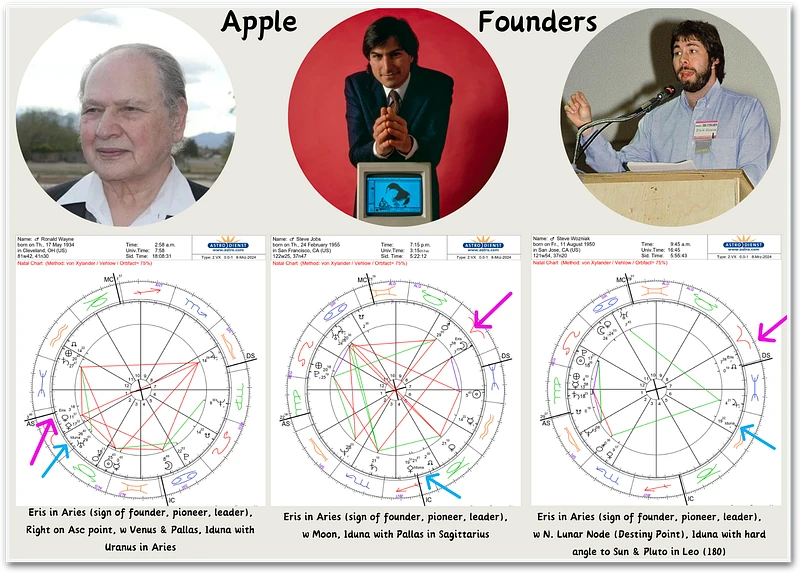
Figure 6. Horoscopes of Three Apple Founders Presented: Ronald Wayne, Steve Jobs, Steve Wozniak. (Horoscopes generated via astro.com)
c. Horoscope Analysis of Isaac Newton:
We proceeded with our research and turned our attention to Isaac Newton, another significant historical figure closely tied to the apple motif. The story of the apple falling from the tree and Newton’s subsequent insights into gravity and foundational Newtonian physics is widely known. This event marks a pivotal moment in the history of science, symbolising the birth of scientific understanding and the discovery of fundamental principles that underpin our understanding of the universe.
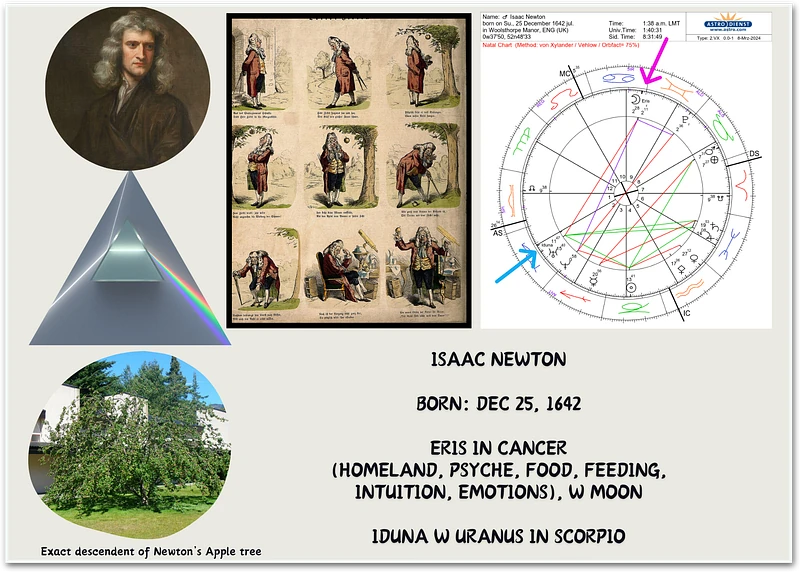
Figure 7. The horoscope of Isaac Newton is presented, along with images depicting Newton’s Apple tree at Trinity College, Cambridge, and wood engravings illustrating Newton’s famous steps under the apple tree ( all from wikipedia, Horoscopes generated via astro.com).
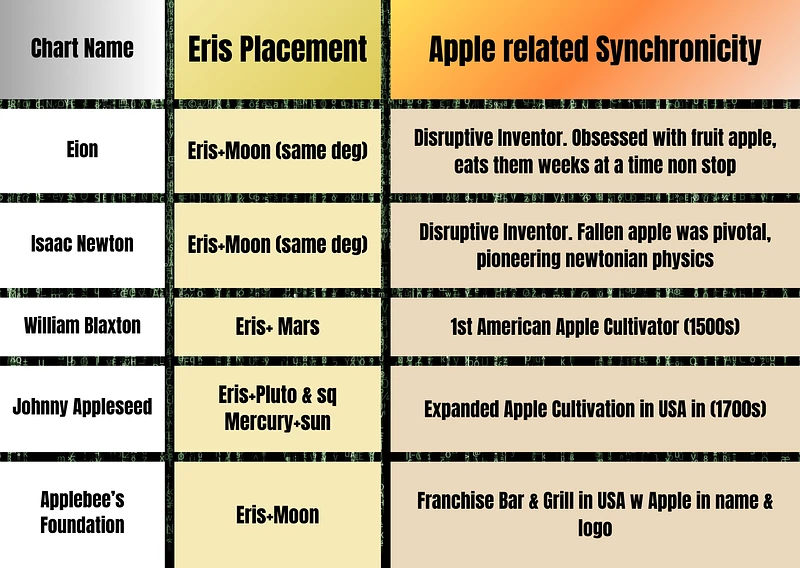
Upon creating Isaac Newton’s horoscope, we were astounded to find Eris fused with the moon in his chart, mirroring the pattern we observed with Steve Jobs and several other figures (Figure 7). What’s even more intriguing is that Eris was positioned in the sign of Cancer at the time of Newton’s birth in 1642 (Julian calendar), which is three signs ahead of Aries where it has been residing for the past century. The statistical odds of such alignments were so glaringly evident that we couldn’t help but take note, even though we didn’t calculate them explicitly.
d. Horoscope Analysis of Other Apple-Related Ventures:
We delved deeper into our fascinating study, conducting extensive research on other historically significant figures and ventures related to apples. After thorough investigation, we identified a few individuals/ventures that met our criteria (Figure 8). One of the charts we examined was that of Rev. Blaxton, a horticulturalist and clergyman known for establishing the first documented orchard in the New World and cultivating the first variety of American apples in the 1600s. In his horoscope, we found Eris conjoined with Mars in Taurus, a symbolic alignment representing agriculture and farming.
Another notable figure we included in our research was Johnny Appleseed, an American pioneer nurseryman and a missionary who is credited with introducing apple trees to vast areas of the United States and Canada in the 1700s (Figure 8). According to Wikipedia : “He became an American legend while still alive, due to his kind, generous ways, his leadership in conservation, and the symbolic importance he attributed to apples.” In his horoscope, Eris is in Capricorn, the sign of commercialisation and business ventures, along with Pluto, which symbolises transformation and rebirth. Additionally, there is a 180-degree aspect to the Moon in his chart, which may explain his kind nurturing attitude toward apple cultivation and conservation.
I thought I was done looking for more evidence when I suddenly came across the logo of an American franchise called “Applebee’s,” which also features an apple (Figure 8). Curious, I decided to see if there was any correlation between Eris and the foundation of this restaurant chain. To my amazement, the very day this restaurant was founded aligned with Eris being in conjunction with Pallas and the Moon in the skies!
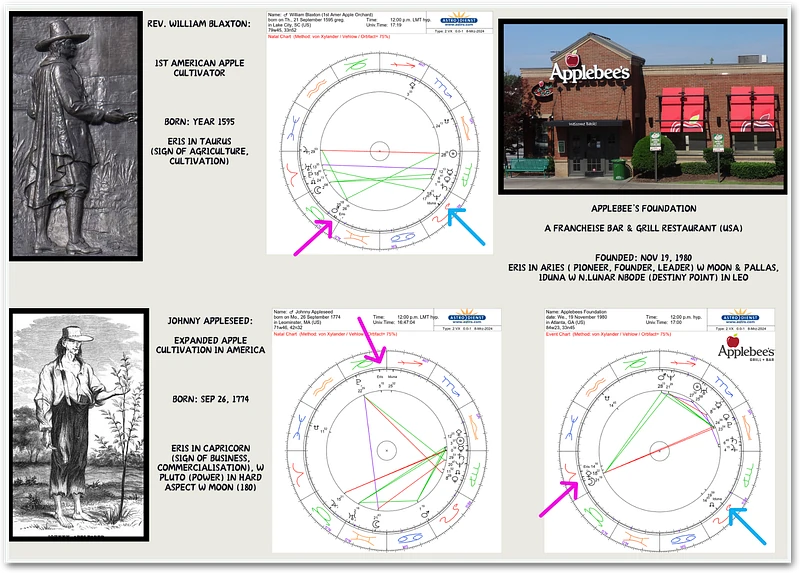
Figure 8. The horoscopes of the first American apple cultivator, William Blaxton (top), and the first commercial pioneer of large-scale apple cultivation, Johnny Appleseed (bottom left), are presented. Additionally, the horoscope of the franchise chain Applebee’s (bottom right)is also included (Horoscopes generated via astro.com)
e. Horoscope Analysis of Eris-Related Religions/Belief Systems:
To our amazement, during our research, we stumbled upon a contemporary cult or religion associated with Eris. One such system that prominently features Eris is Discordianism, a movement that emerged in the 1950s-1960s and was founded by two men using fictional figures Malaclypse the Younger and Omar Khayyam Ravenhurst. Discordianism is characterised as a modern, absurdist, and satirical philosophy, often viewed as a parody religion (6,7).
The movement’s creators, Greg Hill (known as Malaclypse the Younger) and Kerry Wendell Thornley (known as Omar Khayyam Ravenhurst or Lord Omar), conceived Discordianism as a playful reaction to the increasingly absurd and chaotic nature of the world. Their seminal work, the “Principia Discordia,” published in 1965, serves as the central text of Discordianism (6,7).
Discordianism celebrates chaos, humour, and paradox, challenging established beliefs and structures while advocating for individualism and skepticism. The influence of Eris and its core attributes is evident throughout this belief system (6,7). In Figure 9, excerpts from the original Discordian manifesto further illustrate these connections.
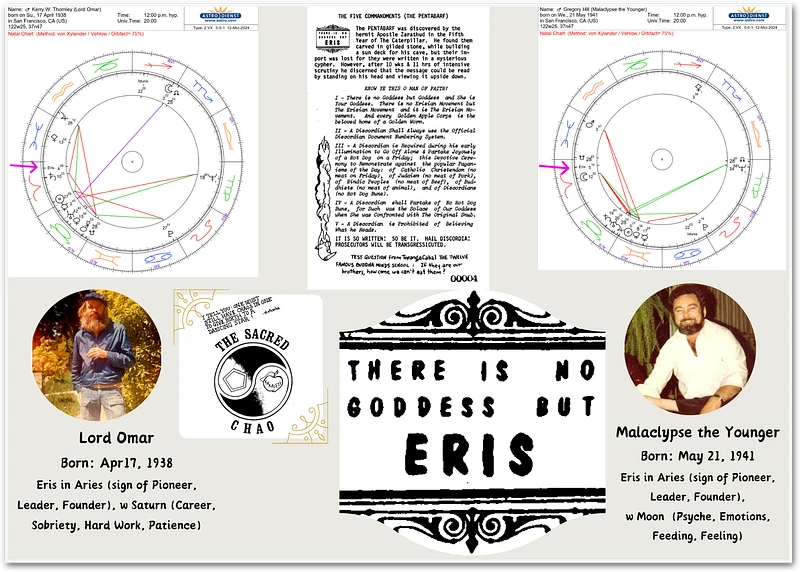
Figure 9. The horoscopes of the founders of Discordianism are presented, along with images related to Discordian literature sourced from Wikipedia . (Horoscopes generated via astro.com)
In Lord Omar’s chart, Eris is positioned with Saturn, likely leading him to methodically establish a structured business or organisation around Eris-related concepts. This placement may have exposed him to challenging life lessons associated with his rebellious Eris persona, clashing with traditional Saturnian ideologies, a conflict that likely troubled him from a young age, leading to a rebellion against Saturnian values more than anything else.
On the other hand, Malaclypse the Younger’s identity is defined by Eris. Eris is fused with his moon, representing his psyche, as seen in several other instances we’ve discussed. This signifies that the Eris script was deeply ingrained in his thoughts, feelings, actions, and behaviour, more so than any other Eris configuration. Within the Discordian movement, he must have embodied the feminine aspect, while Lord Omar represented the masculine.
f. Horoscope Analysis of Artists known for Eris-Related Artwork
To gather additional evidence for our hypothesis, I recognised the importance of examining the charts of artists renowned for creating significant artworks related to the Eris/Apple story in the context of the Trojan War. Searching the literature, I meticulously analysed the horoscopes of numerous artists associated with this theme, transcending temporal and spatial boundaries to ensure the thoroughness of our research (Figures 10-12).
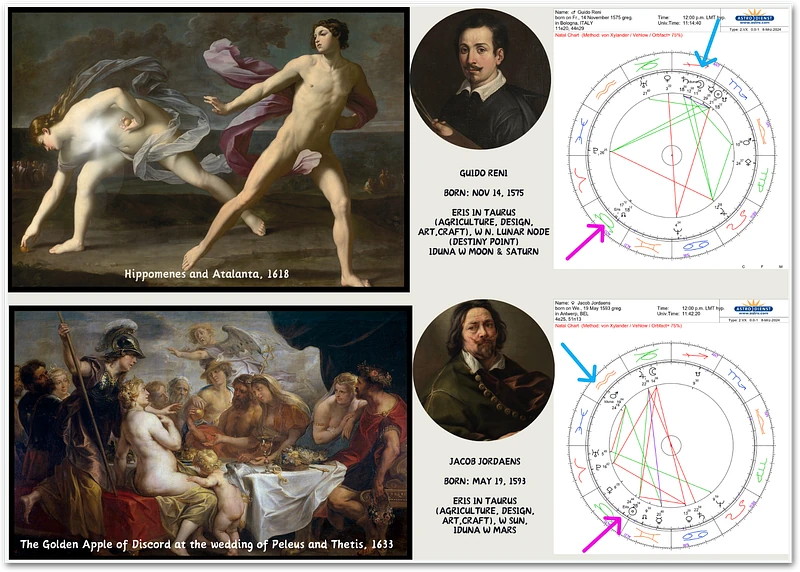
Figure 10. The horoscopes of two artists with famous Eris-related artwork are presented, along with images sourced from Wikipedia pages for Reni and Jordaens . (Horoscopes generated via astro.com)
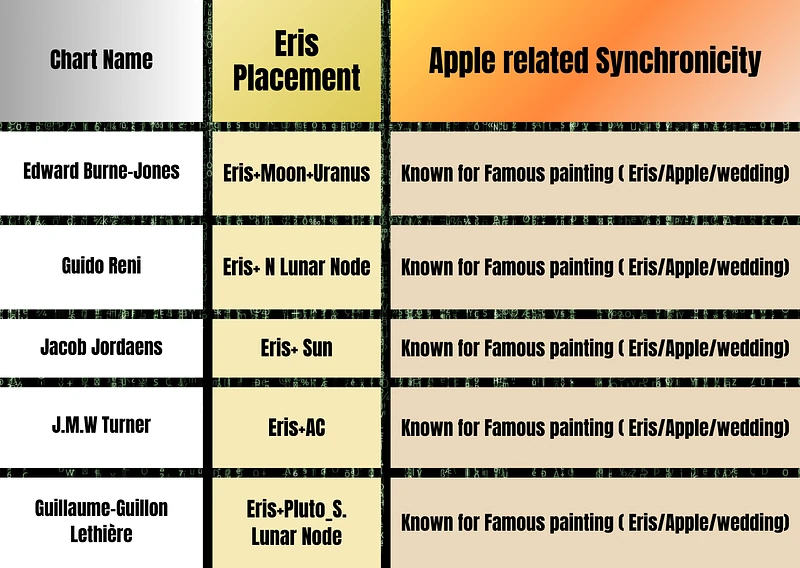
The findings are detailed in the Appendix Table and depicted visually in Figures 10–12. British painter Edward Burne-Jones, renowned for his masterpiece “The Garden of the Hesperides,” (1869) has Eris positioned in Aquarius alongside the Moon and Uranus in his chart (Figure 12). Italian painter Guido Reni, celebrated for his work “Hippomenes and Atalanta,” (1618)features Eris in Taurus closely aligned with his destiny point, the North Lunar Node (Figure 10).
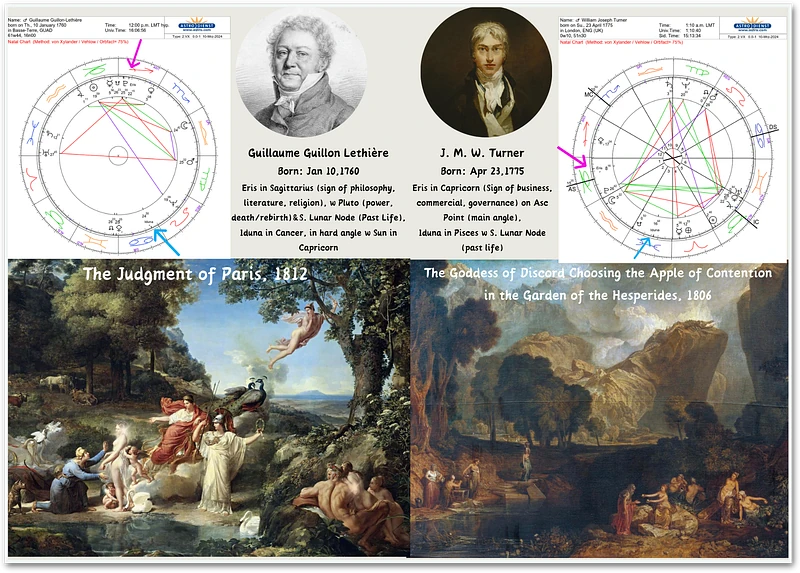
Figure 11. The horoscopes of two artists with famous Eris-related artwork are presented, along with images sourced from Wikipedia pages for J.M.W Turner and Guillon-Lethière . (Horoscopes generated via astro.com)
Belgian painter Jacob Jordaens, famous for “The Golden Apple of Discord at the Wedding of Peleus and Thetis,” (1633)displays Eris in Taurus conjunct the Sun in his chart (Figure 10). British painter J.M.W Turner, known for his famous painting “The Goddess of Discord Choosing the Apple of Contention in the Garden of the Hesperides.” (1806), has Eris prominently placed on the Ascendant angle (Figure 11). Lastly, French painter Guillaume Guillon-Lethière, renowned for “The Judgment of Paris”(1812), presents Eris situated in Sagittarius alongside Pluto and the South Lunar Node (Figure 11).
Just to provide additional evidence and address any skepticism from the ‘usual coincidence calling naysayers’, I conducted extensive research into literature and unearthed various myths and symbols related to apples. One fascinating example is the legend of the 10,000 Persian Immortals, who were called “Apple Bearers” due to the Golden Apple adorning the tips of their spears, crafted from actual gold. Additionally, I delved into Slavic and Russian myths depicting magical birds with golden feathers that were said to be ‘golden apples’ granting immortality. Unfortunately, verifying these myths and trying to find Eris related correlation was challenging as the origins of these stories were often obscure or lacked known birth details of their creators. However, I had some success when I sought other apple-related symbols associated with other asteroids or celestial bodies that could be analysed within the scope of this study.
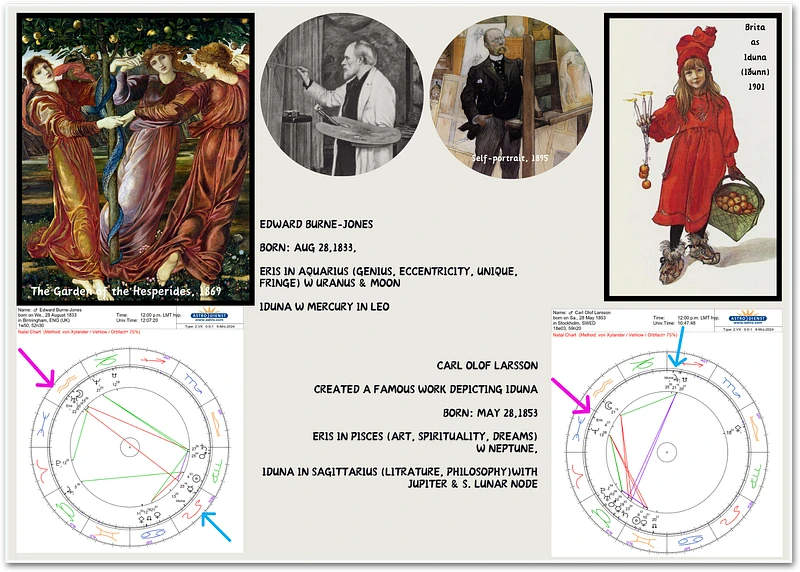
Figure 12. The horoscope of Edward Burne-Jones, known for his Eris-related artwork, is presented on the left. On the right, the horoscope of Carl Larsson, known for an Iduna-related artwork, is included. (Images are sourced from artist’s wikipedia pages & Horoscopes are generated via astro.com)
Our success had everything to with discovery of ‘Iduna’ or ‘Iðunn’, a Norse goddess associated with youth, rejuvenation, vitality, and renowned for safeguarding the ‘golden apples’ granting immortality to Norse gods (8). Interestingly, I found that an asteroid named Iduna (176 Iduna) existed within our solar system’s asteroid belt, discovered by Austrian astronomer Johann Palisa in 1877. Iduna’s symbolism differs significantly from Eris or Discordia, focusing on renewal and preservation rather than discord and strife (8). However, for the purpose of this study and our hypothesis, if Iduna’s relevance to apples, irrespective of their nature, holds true, we should observe significant correlating /synchronous placements in relevant charts.
Exploring Iduna’s connotations further, I found limited Iduna-related artwork. However, I came across work by Swedish painter Carl Olof Larsson, known for a painting titled “Brita As Iduna” (1901), depicting a young girl dressed in red attire holding a basket of apples (Figure 12). Given Iduna’s Norse deity status, Larsson’s portrayal aligns well. I then analysed Larsson’s chart (Figure 12) to ascertain Iduna’s prominence, essential for verifying the hypothesis. Larsson’s chart notably features both Iduna and Eris in prominent placements: Eris with Neptune in Pisces and Iduna with Jupiter and South Lunar Node in Sagittarius, both signs associated with storytelling, art, belief systems, and literature.
Concluding Remarks:
After presenting all this evidence linking various Apple-related concepts with the mythological goddess of chaos and discord, Eris, what are the implications of this archetype influencing and /or correlating with our reality on a massive scale? Where does Eris appear in your horoscope? Are you someone strongly influenced by the Eris script? Is Eris closely connected to your luminaries, angles, or personal planets? Is Eris a highly evolved paradigm shifter capable of catalysing positive revolutions, or is your Eris causing more harm than good? What version of this Goddess is active in your psyche?
Can we draw parallels between Apple Corporation’s technological revolution and the rapid global development of smart gadgets, or the pioneering of Newtonian physics with the symbolism of throwing the ‘golden apple to the fairest’? Will future historians compare our era to the events leading to the Trojan War, seeing it as a time of significant upheaval, chaos, and discord? These questions invite us to explore the profound impact of Eris archetype and related themes on both personal and collective levels.
Upon reflecting on the substantial evidence presented by so called ‘pseudoscientific’ tools, the distinction between correlation and causation appears to diminish in significance. In the realm of science, we often accept many real phenomena without a complete understanding of their underlying mechanisms, instead relying on their reproducible results. However, when it comes to ancient holistic sciences like astrology, divination, or similar, a noticeable double standard emerges. The insistence on knowing the exact mechanism of action before considering validity has led many within the scientific community to dismiss astrology since the 1660s, resulting in hypocrisy and unscientific demands.
Given our current lack of a unified understanding of physics, it seems imprudent to hastily dismiss astrology and much of the new age domain as mere junk. Denying inclusion, funding, and fair access to new age practitioners hinders comprehensive research and limits our potential for insights into these phenomena. Adopting a more open-minded approach could lead to profound understandings and revelations within the context of a simulated reality governed by a complex and enigmatic language. It becomes evident that deciphering such complex code requires more than Newtonian left-brain reductionism; it calls for a holistic exploration of the universe’s mysteries.
Written by: Gaia from Cosmic Program
To our readers: Crafting these articles is a time-intensive endeavour. We are employed full-time researchers with busy lives, plus, we never do things half way. Regrettably, for reasons you’re all aware of, it’s impossible to publish our work in scientific or mainstream journals or mainstream media to reach a broader audience. We encourage you to engage in the comments; responding to inquiries is a personal religion of mine. Also, we’d appreciate if you share this article. We don’t have a strong online presence, being self-proclaimed “nerds” with limited social connections, and as explained previously, we’re unable to share our work even within our own community of scientific colleagues and connections.
For a limited time, we have a 50% Sale on our 10+ hour detailed readings/analysis of your horoscope, delivered as a sophisticated audiobook. There is absolutely nothing like this product out in the market and certainly, for this price, it is too good to be true. Our analysis of every horoscope is as thorough, as scientific, and as comprehensive as our articles. If you are interested in an ‘example’ of our readings, please listen to the ones provided under ‘example’ section.
Appendix:
Table 1: Unique Apple-Related Synchronicities with Eris Placements in Horoscopes
References:
3- New Planet
all about the new tenth planetweb.gps.caltech.edu